PHRESH is designed for time-critical healthcare. Using wearable sensors, secure connectivity, and AI-driven analysis, the system enables rapid detection of emergencies and supports preventive intervention. Caregivers gain real-time insights to reduce response times and improve outcomes.
In the Netherlands, PHRESH powers the connected ambulance. Paramedics are equipped with tools to monitor patients on the way to the hospital and transmit data—EEG signals, continuous blood pressure, speech, and video—directly to emergency teams. This seamless data exchange allows hospitals to prepare treatment in advance, saving valuable minutes in acute care where every second counts.
The following high-level technical solutions will be explored and implemented:

Advanced sensor technologies for accurate data collection

Artificial Intelligence (AI) and machine learning for data analysis and risk prediction

Privacy-preserving data sharing to protect patient information

Quantum-secure communication for optimum data security

Real-time cyber threat prevention to ensure system integrity

Edge networking capabilities for faster and network data processing

Next-generation networks (i.e. 6G) for optimal connectivity
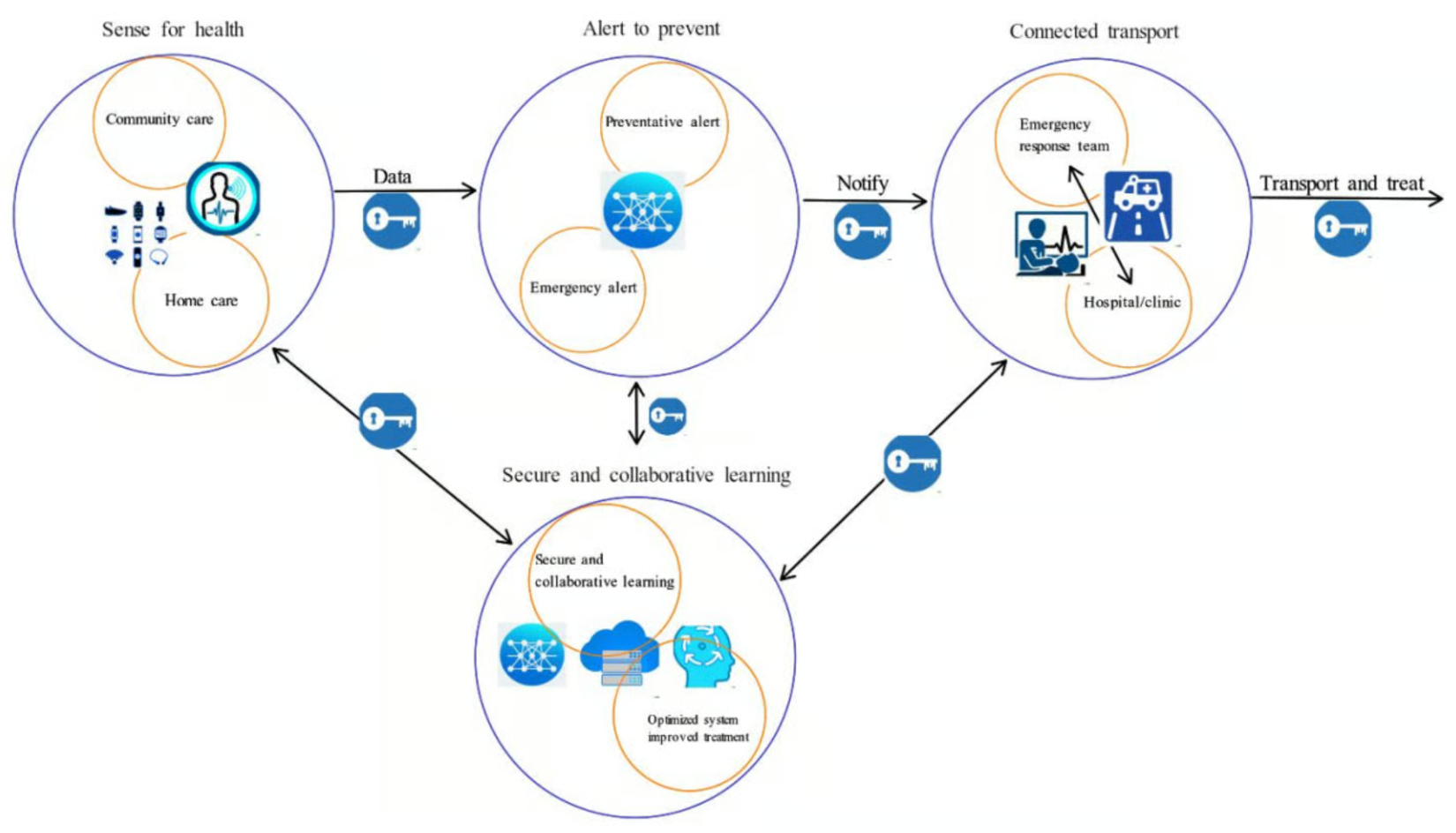
The PHRESH project aims to apply this framework to clinically relevant use cases where the core concepts can be summarised as follows:




Copyright © 2025 PHRESH Plus